




In today’s fast-paced fashion landscape, men’s bags are no longer just functional tools; they’ve evolved into important expressions of personal taste and lifestyle. Among them, the men’s crossbody bag is quickly becoming an indispensable fashion item for modern urban men due to its unique appeal. It not only frees up your hands but also perfectly meets the demands of a fast-paced city life with its moderate capacity and diverse designs.
I. Men’s Crossbody Bags: Definition, Classification, and Unique Appeal
A men’s crossbody bag, as the name suggests, is a bag worn diagonally across the body with an adjustable strap, usually positioned at the waist or hip for secure storage and easy access to items. In the category of luggage, it’s explicitly classified as an important subcategory of “premium men’s bags,” signaling its growing status in the fashion world.
Although there are many similar bags on the market, such as single-shoulder bags, chest bags, and messenger bags, crossbody bags stand out for their unique wearing methods and functionality. Single-shoulder bag: Usually refers to a bag with a short shoulder strap that is only hung on one shoulder, such as a handbag or some school bags. For more information about the definition of single-shoulder bags, please refer to Wikipedia. Chest bags are mostly small and close to the chest, emphasizing movement and convenience. Although messenger bags have a high degree of overlap in function with crossbody bags, they usually have a larger capacity and a more workwear style. It is worth noting that in the actual market, these concepts are often mixed, and many products have multiple wearing methods such as crossbody, single shoulder, chest back, and even hand-held, reflecting the trend of product design towards multifunctionality.
Shoulder bag: Typically refers to a bag with a shorter strap, hung over one shoulder, like a handbag or certain book bags.
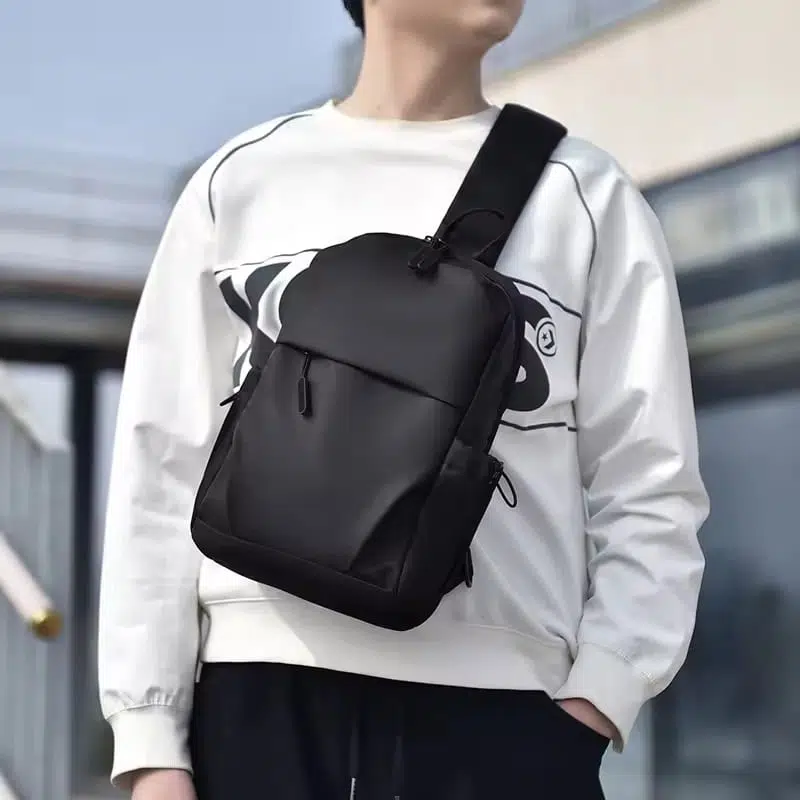
Chest bag: Often a smaller, form-fitting style worn close to the chest, emphasizing athleticism and convenience.
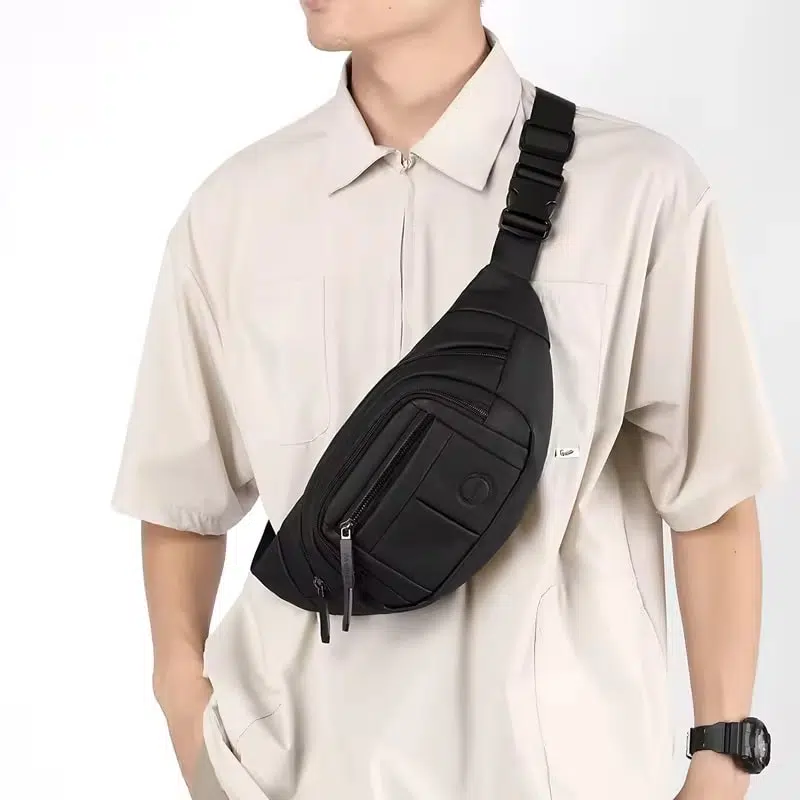
Messenger bag: While highly overlapping in function with a crossbody bag, these are usually larger and have more of a workwear style.
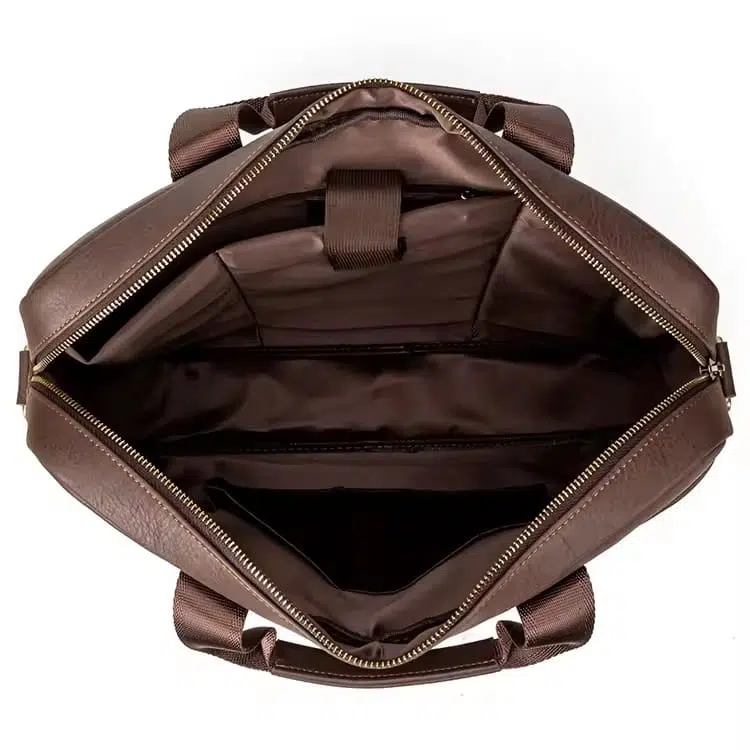
It’s worth noting that in the actual market, these concepts are often used interchangeably, with many products offering multiple ways to wear them, including crossbody, single-shoulder, chest, and even handheld. This reflects a trend in product design towards multifunctionality.
Based on size, function, and style, men’s crossbody bags can be further categorized into:
- Mini Crossbody Bag/Phone Bag: Small and exquisite, primarily for carrying essentials like phones and keys; a highlight for fashion pairing.
- Daily Commuter Crossbody Bag: Moderate capacity, able to hold tablets (like a 9.7-inch iPad or iPad Mini) or notebooks, focusing on practicality and internal organization.
- Messenger-style Crossbody Bag: Larger capacity, usually with a flap design, leaning towards casual or workwear styles, suitable for carrying documents or larger items.
- Business Crossbody Bag: Often made of leather, with a simple design, emphasizing texture and professionalism, suitable for business occasions.
- Sport/Functional Crossbody Bag: Made from durable, water-repellent materials, with multiple compartments, emphasizing lightness, durability, and versatility, suitable for outdoor activities.
II. Key Features and Practical Functions of Men’s Crossbody Bags
The popularity of men’s crossbody bags is inseparable from their advancements in material, structure, wearing style, and functionality.
1. Material Selection and Exquisite Craftsmanship
The material choices for crossbody bags are diverse, ranging from luxurious leather to durable nylon, each with distinct characteristics:
- Leather: High-end crossbody bags often use premium calfskin or PU leather, showcasing luxury and durability through exquisite craftsmanship (like Bottega Veneta’s Intreccio leather weaving).
- Nylon/Oxford Cloth: Casual, sporty, or functional crossbody bags often use nylon or Oxford cloth, offering water-repellent, wear-resistant, and lightweight properties.
- Special Materials: Some brands experiment with innovative materials, such as Rimowa’s ultra-durable grooved aluminum-magnesium alloy hard shell, providing extreme durability and unique aesthetics. MCM even uses nylon made from recycled plastic bottles, showcasing an eco-friendly ethos.
The choice of material directly reflects brand positioning and product functional focus. Luxury brands prioritize quality and craftsmanship, while mass-market brands focus on practicality and convenience. The use of sustainable materials is also a future direction for the fashion industry’s green transformation.
2. Size, Capacity, and Internal Structure Design
Men’s crossbody bags come in various sizes, and their internal design tends towards multi-layered, partitioned, and scientifically arranged layouts to achieve organized storage and quick access to items. Common configurations include a main compartment, zippered inner pockets, open compartments/slip pockets, credit card slots, mesh pockets, and back pockets. This refined design meets the modern person’s need to carry diverse items, enhancing user experience and daily efficiency.
3. Wearing Styles and Ergonomic Comfort
Crossbody bags often offer multiple wearing styles, such as crossbody, single-shoulder, chest, and even handheld or waist-worn. Some styles even have detachable shoulder straps that can be used as clutches, significantly increasing the product’s flexibility and value. Shoulder strap design focuses on ergonomics, emphasizing light and comfortable carrying for extended periods, reducing shoulder pressure.
4. Functional Design Highlights: Waterproofing, Anti-theft, and Durability
Modern crossbody bag functional design is continuously advancing:
- Waterproof/Water-repellent: Many bags use water-repellent or waterproof materials to protect internal items from rain.
- Anti-theft: Anti-theft zippers with self-locking functions or wearing styles (like wearing it across the chest) enhance security, addressing consumer concerns about the safety of their valuables.
- Durability: Material and craftsmanship choices focus on durability, ensuring the bag lasts.
- Lightweight Design and Quick Release: Emphasis on lightweight and quick-release designs enhances carrying convenience and efficiency of use.
These functional highlights directly address practical problems users may encounter in daily commutes, travel, and outdoor activities, boosting the product’s core competitiveness.
III. Design Vision and Brand Philosophy of Men’s Fashion Bags
The design vision for men’s crossbody bags generally revolves around the balance of practicality and aesthetics, incorporating deeper brand values:
- Practicality and Elegance Combined: Brands aim to provide “elegant and practical” solutions for modern urban life, showcasing a high-end feel through simple lines and quality materials.
- “Made to Last” and Sustainability: Many brands adhere to the “Made to Last” principle, committed to creating “truly sustainable timeless pieces.” Luxury brands like Louis Vuitton and Gucci launched sustainability-focused collections in 2023, using recycled materials, and the Kering Group committed to net-zero emissions by 2030. MCM also mentions using nylon made from recycled plastic bottles. Mulberry emphasizes “responsible innovation” and “sustainable timeless pieces.” This is more than just a marketing strategy; it’s the luxury industry’s deep response to global climate change and changing consumer values. As environmental awareness grows, consumers, especially younger generations, increasingly prioritize a brand’s social responsibility and a product’s environmental impact in their purchasing decisions. By adopting sustainable materials, promoting circular economy models, and setting carbon emission targets, luxury brands not only fulfill corporate responsibility but also build new brand narratives, attracting ethically conscious customers and imbuing products with higher added value and emotional connection. Brands failing to keep up with this trend may lose their competitive edge in the future market. This trend will drive a green transformation across the entire supply chain, from raw material procurement to manufacturing, with a greater focus on environmental protection. For brands, failing to keep up with sustainable development may face market elimination risks. At the same time, sustainability has also become a new driver for innovative design, prompting designers to explore new materials and processes, thereby creating more forward-thinking and socially valuable products.
- Heritage and Innovation: Brands seek a balance between classic and modern, showcasing the concept of “inheriting tradition and moving towards the future” through iconic elements and avant-garde designs.
- Comfort as Core: User experience-centric design, emphasizing emotional value and the joy of daily wear.
Sustainable development has become a significant trend in the luxury industry, with brands attracting ethically conscious customers and adding higher value to products by adopting sustainable materials and promoting circular economy models.
IV. Diverse Application Scenarios for Men’s Crossbody Bags
Due to their versatility and convenience, men’s crossbody bags are widely suitable for various life scenarios:
- Daily Commuting and Business Travel: Easily accommodates essentials like phones, wallets, and tablets, freeing up hands and improving urban life efficiency. Some business-style crossbody bags are also suitable for business travel, offering a professional and stylish image.
- Casual, Sport, and Travel Scenarios: Functions as a fashionable accessory for casual outfits, enhancing overall styling. Lightweight, water-repellent, and multi-functional sports crossbody bags are suitable for outdoor activities. Large-capacity and multi-compartment crossbody bags can organize travel essentials, adapting to various environments.
The “multi-scenario applicability” of crossbody bags meets modern consumers’ demand for “one item, multiple uses,” which is a key advantage that makes them stand out among many bag types.
V. Men’s Bag Market Trends and Future Development
The men’s crossbody bag market shows a diversified competitive landscape. Luxury brands (e.g., Hermès, Louis Vuitton, Prada) emphasize materials, craftsmanship, and sustainability; fashion trend brands (e.g., Balenciaga, Thom Browne, Marni) focus on design and personalization; while functional brands (e.g., Rimowa, Xiaomi Youpin) prioritize practicality and durability.
Future design styles will combine retro and classic return, minimalism and quiet luxury, and stylish athletic wear and workwear. In terms of colors, earth tones, deep greens, and burgundy (natural-inspired colors) will continue to be popular. Sizes will show a polarized trend, with miniature bags and extra-large capacity bags coexisting.
Additionally, smart technology and modular design hold great potential. Although smart crossbody bags are not yet widespread, trends like anti-theft zippers with self-locking functions and “innovative design and unique functionality” suggest that the future may integrate more smart technologies, such as smart positioning, charging functions, and biometric unlocking. The modular trend in bag accessories also hints at the future possibility of modular design for the crossbody bag itself, allowing users to add or remove functional modules based on their needs, further enhancing personalization and versatility.
Conclusion
The men’s crossbody bag has become an ideal choice for modern men, balancing both fashion and practicality. If brands can continue to deepen functional innovation, strengthen material and craftsmanship advantages, accurately position and segment styles, focus on user experience and ergonomics, and actively embrace sustainable development, they will undoubtedly gain a favorable position in the fierce market competition and meet consumers’ growing diverse needs.