




How to Choose the Best Metal Hardware for Handbags: The Ultimate Manufacturer’s Guide
In the competitive world of fashion, the difference between a luxury item and a mass-market commodity often comes down to the smallest details. While the quality of leather or fabric is immediately palpable, the hardware is the “jewelry” of the bag. It is the first thing to catch the light and the last thing to fail on a well-made product. Knowing how to choose the best metal hardware for handbags is not just an aesthetic decision; it is a structural and financial necessity for any serious fashion brand.
Hardware failures—snapped lobster clasps, tarnished gold plating, or magnetic snaps that lose their grip—are among the top reasons for customer returns and brand reputation damage. Whether you are a startup founder sketching your first tote or a production manager scaling up a collection, this comprehensive guide will walk you through the metallurgy, manufacturing processes, and quality control standards required to select the best metal hardware for handbags.
Remember, hardware selection depends entirely on the bag’s function. A travel bag needs heavy-duty clasps, while a clutch needs delicate locks. Review the 44 essential bag categories to ensure you are sourcing the right hardware for the right usage.
What Are the Different Types of Handbag Hardware?
Before diving into metallurgy, we must categorize the components. Hardware serves two primary roles: functional structural support and decorative branding. Understanding the different types of handbag hardware? is the first step in building a Bill of Materials (BOM) that balances cost with performance.
1. Functional Connection Hardware
These pieces bear weight and movement. Failure here renders the bag unusable.
- Dog Clips / Lobster Clasps: The pivoting hooks used to attach shoulder straps. They must withstand high tensile stress and frequent rotation.
- D-Rings and O-Rings: The anchor points sewn into the bag to hold the clips.
- Buckles and Sliders: Used for adjusting strap length.
- Magnetic Snaps: The invisible or visible closures that secure flaps.
- Zippers and Pullers: Often a brand’s most interacted-with touchpoint.
2. Decorative and Branding Hardware
These elements define the visual identity but bear less physical stress.
- Logo Plates: Metal labels featuring the brand name.
- Studs and Rivets: Used to reinforce stress points or create visual patterns (e.g., bag feet).
- Chains: Used as straps or purely ornamental drapes.
- Grommets/Eyelets: Metal rings used to reinforce holes for drawstrings.
Material Matters: The Core of Quality
The most critical decision you will make is selecting the base metal. The “finish” (gold, silver, gunmetal) is just a surface coating; the base metal determines the weight, strength, and price. When asking what the most durable material for handbags is, the answer lies in the trade-offs between three primary contenders: Zinc Alloy, Brass, and Stainless Steel.
1. Zinc Alloy (Zamak)
- The Industry Standard: Approximately 80-90% of fashion handbag hardware is made from Zinc Alloy.
- Pros: It is die-castable, meaning it can be melted and injected into molds to create complex, detailed 3D shapes (like lion heads or intricate logos) with no welding seams. It is affordable and has a good weight to it.
- Cons: It is brittle compared to steel. If cast poorly (with air bubbles inside), it can snap under sudden pressure.
2. Solid Brass
- The Heritage Choice: Traditionally associated with luxury saddlery and high-end trunks.
- Pros: Extremely corrosion-resistant and has a “warm,” heavy, luxurious feel. It does not rust; it develops a patina. It is softer than steel, allowing for deep, crisp engraving.
- Cons: Expensive (copper is a primary ingredient). It cannot be die-cast into complex 3D shapes as easily as zinc; it is usually sand-cast or machined, which limits design flexibility.
3. Stainless Steel (304 or 316L)
- The Modern Workhorse: Increasing in popularity for high-end streetwear and minimalist luxury.
- Pros: This is arguably the most durable material for handbags. It is incredibly strong, hypoallergenic, and scratch-resistant. It does not require plating to be silver; the metal itself is polished to a shine, so the color never fades.
- Cons: Very hard to work with. It is difficult to mold into detailed shapes and expensive to polish.
4. Iron / Steel
- The Budget Trap: Common in fast fashion.
- Pros: Very cheap and strong.
- Cons: It rusts. Iron hardware will eventually oxidize, bubbling under the plating and leaving brown stains on the bag’s leather. It also feels “cheap” and light.
| Material | Weight | Durability | Cost | Best Use |
| Zinc Alloy | Heavy | Moderate | Low-Mid | Logos, complex shapes, general hardware |
| Solid Brass | Heavy | High | High | Heritage brands, buckles, luxury accents |
| Stainless Steel | Medium | Very High | High | Minimalist clips, zippers, functional parts |
| Iron | Light | Low (Rusts) | Very Low | Fast fashion, internal reinforcements |
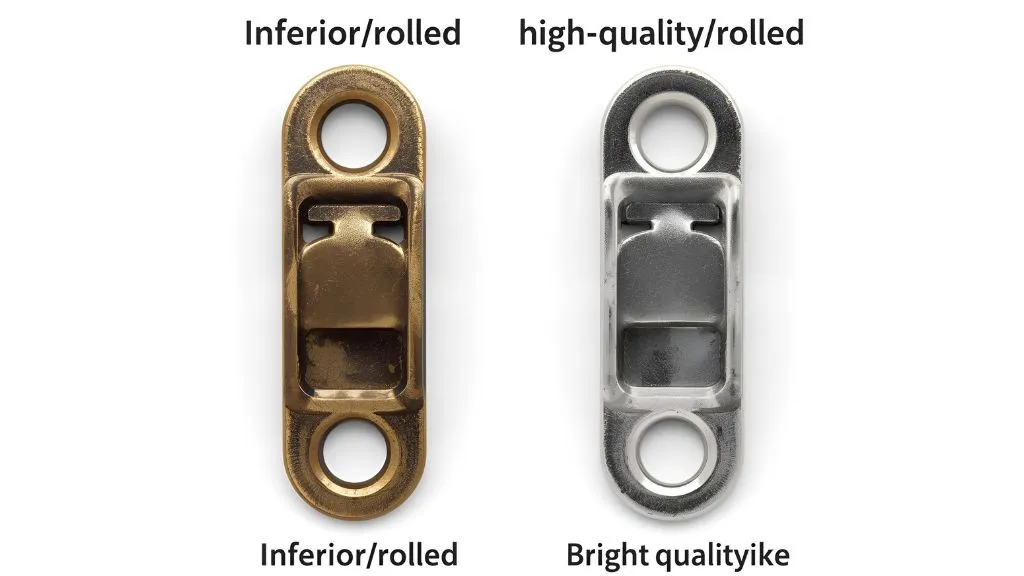
The Art of Plating: Rack vs. Barrel
Once you have chosen the base material (e.g., Zinc Alloy), you must choose how to make it gold, rose gold, or gunmetal. This is where many brands get tricked. The method of plating defines how long the color lasts.
1. Barrel Plating (Rolling Plating)
Thousands of hardware pieces are thrown into a rotating barrel submerged in the chemical bath. They tumble against each other while being plated.
- Result: The tumbling causes microscopic scratches and uneven coverage. The finish is often duller and thinner (0.01 – 0.05 microns).
- Verdict: Suitable for rivets, internal magnets, or fast-fashion items where cost is the only driver.
2. Rack Plating (Hanging Plating)
Each individual piece of hardware is mounted on a rack frame, copper-wired, and dipped into the plating tank. They never touch each other.
- Result: A mirror-like, flawless finish with a thicker coating (0.1 – 0.5 microns or more).
- Verdict: This is the standard for mid-to-high-end luxury bags. If you want the best metal hardware for handbags, you must specify “Rack Plating” to your manufacturer.
3. PVD (Physical Vapor Deposition)
A vacuum coating process is used in high-end luxury (like luxury watches).
- Result: It bonds the color to the metal at a molecular level. It is 10x harder than standard electroplating and almost impossible to scratch or fade.
- Verdict: The gold standard for durability, but significantly more expensive.
Application Note: PVD is particularly critical for Men’s Crossbody Bags, where customers prefer matte black or gunmetal finishes. Standard plating often scratches easily on these dark colors, revealing the white zinc underneath. PVD ensures the black color is bonded molecularly, preventing this common complaint.
💡 Hardware Defines Quality
Choosing the right hardware is just one part of building a durable bag. Learn how we integrate heavy-duty clips into our reinforced strap designs in our main guide.
👉 See the Engineering Guide: Manufacturing the Best Crossbody Bag for Men
Durability and Testing Standards
You cannot determine quality just by looking at a sample. You must demand testing data. When sourcing, ask your supplier for the following test results to ensure you are getting the best metal hardware for handbags.
The Salt Spray Test (ASTM B117)
This is the universal standard for corrosion resistance. Hardware is placed in a chamber and sprayed with a saline mist.
- 24 Hours: Minimum standard for budget bags.
- 48 Hours: Standard for mid-range brands.
- 72+ Hours: Required for luxury handbags to prevent tarnishing in humid climates (e.g., Florida, Singapore).
Tensile Strength Test
This measures how much force a D-ring or dog clip can take before snapping.
- Standard: A typical handbag strap clip should withstand at least 30-50kg of pull force. For travel bags, this should be higher (80kg+).
Friction / Cycle Test
For moving parts like turn-locks or spring clips, this test simulates opening and closing the mechanism thousands of times. A quality lock should survive 5,000 to 10,000 cycles without losing its “click” or breaking.
What Are Some Red Flags to Avoid When Buying Handbags?
As a brand owner, you need to spot quality issues during the sampling phase before you commit to a bulk order. What are some red flags to avoid when buying handbags? Here are the tell-tale signs of cheap hardware:
1. The Magnet Test
Bring a strong magnet to your supplier meeting.
- The Test: Touch the magnet to the “brass” or “zinc” hardware.
- The Red Flag: If it sticks strongly, it is likely iron or steel, not brass or zinc. Iron is cheap and will rust. (Note: The spring inside a trigger clip will always be magnetic steel, which is normal. The body of the clip should not be).
2. “Orange Peel” Surface
Look closely at the reflection on the metal.
- The Red Flag: If the reflection is wavy, bumpy, or looks like the skin of an orange, the base metal was not polished well before plating. High-quality hardware should be polished to a mirror finish before the gold layer is added.
3. Rough Parting Lines
Check the sides of D-rings or the inside of buckles.
- The Red Flag: A sharp, raised line running down the side is a “parting line” from the mold that wasn’t sanded down. It makes the bag look cheap and can even scratch the customer’s skin or snag their clothing.
4. Color Inconsistency
- The Red Flag: Compare the zipper puller to the D-ring. Do they match? Often, factories buy zippers from one supplier and D-rings from another. A “Gold” finish varies wildly between factories. The best metal hardware for handbags requires a “batch match,” where all components are plated in the same tank at the same time.

Sustainability and Compliance: The New Standard
Modern luxury is sustainable. Consumers are increasingly asking about the environmental impact of the products they buy.
Eco-Friendly Plating
Traditional plating uses cyanide and heavy metals. Many top manufacturers now offer “Green Plating” or “Eco-Plating,” which is nickel-free and lead-free.
- Compliance: If you sell to Europe (REACH standards) or California (Prop 65), your hardware must be lead-free (under 90ppm) and nickel-free/low-leach. Failure to comply can result in lawsuits and product recalls.
Recycled Materials
While recycled zinc is harder to source due to purity requirements, recycled brass and stainless steel are becoming more available. Using recycled content can be a powerful marketing story for your brand.
Step-by-Step Guide to Sourcing the Best Hardware
- Define Your Price Point: Don’t ask for PVD solid brass if your retail price is $50. Match the material to the market.
- Create a “Limit Board”: Obtain physical samples of the exact color gold/silver you want. Send this “Master Sample” to your factory and have them sign it. This is your reference for quality control.
- Specify “Rack Plating”: Explicitly write this in your tech pack.
- Request “Sealant” (Cataphoresis): This is a clear lacquer baked over the plating. It significantly extends the life of the color and prevents tarnishing.
- Audit the Mold: If you are paying for a custom logo mold, ask to see the 3D drawing before they cut the steel. Ensure the attachment legs are long enough for your specific leather thickness.
A Note from the Manufacturer
Expert Tip: Why “Open Mold” Hardware Kills Branding
Many new founders rely on “Open Mold” (market-ready) hardware to avoid mold fees. While this saves money upfront, it makes your bag look identical to generic products found on fast-fashion shelves.
From a manufacturing perspective, creating a custom mold for your logo plate or zipper puller is actually the most cost-effective marketing investment you can make. It prevents counterfeiting and immediately elevates your brand identity. At our factory, we support startups with lower MOQs for these custom components because we know that a unique piece of hardware is often the signature that puts a new brand on the map.
Selecting the best metal hardware for handbags is a balance of art and engineering. It requires looking past the shine of a sample and interrogating the base materials, the plating method, and the testing data.
By choosing the right base metal (likely Zinc Alloy or Brass), insisting on Rack Plating, and mandating salt-spray testing, you protect your brand from the embarrassment of broken clips and faded gold. Remember, your customer might buy the bag for the leather, but they will judge its quality by the hardware.
Ready to elevate your handbag production with high-quality custom hardware?
At B.S. Bag Factory, we specialize in manufacturing premium handbags with custom-molded, rack-plated hardware designed to meet global luxury standards. We handle the technical complexities so you can focus on design.
FAQs
Why does my handbag hardware tarnish so quickly?
Tarnishing is oxidation. It usually happens because the hardware had a thin plating layer (barrel plating) or lacked a protective clear coat (lacquer). Exposure to humidity, perfume, and skin oils accelerates this. To avoid it, request a thicker plating micron (0.5µm+) and a double layer of sealing lacquer.
Can I repair scratched hardware?
Not really. Most handbag hardware is electroplated, meaning the gold color is a thin layer sitting on top of a grey zinc base. Once that layer is scratched through, you cannot “buff it out” like solid gold jewelry. The only fix is stripping and re-plating, which is costly. This is why choosing durable plating (like PVD) initially is vital.
What is the difference between Gold Plated and Gold Tone?
“Gold Tone” usually implies a color mimicking gold, often achieved with brass or colored lacquer, without using actual gold. “Gold Plated” uses real gold (14k, 18k, or 24k) in the chemical bath. Real gold plating has a deeper, richer luster but is more expensive.
Is heavier hardware always better quality?
Generally, yes, but with a caveat. Weight often indicates solid Zinc or Brass rather than hollow iron or plastic. However, if a bag is too heavy, it becomes uncomfortable to wear. The goal is hardware that feels substantial but is engineered to be lightweight (e.g., using hollowed-out backs on chunky logos).
How do I match hardware color across different suppliers?
This is the hardest part of production. The only way is to create a “Master Color Board.” Do not rely on photos; computer screens distort metal colors. Send a physical piece of metal to every supplier (zipper, chain, lock) and require them to match that specific physical standard.